Behind every reliable takeaway beverage is a precisely engineered piece of raw material. In the global packaging supply chain, the specific grade of disposable cups paper dictates everything from thermal resistance to brand presentation. Many procurement teams mistakenly view paperboard as a universal commodity, assuming a cup is just a cup. However, selecting the correct base disposable cups paper for boiling hot coffee, ice-cold fountain sodas, or high-definition custom branding requires distinct technical specifications.
To optimize packaging procurement and avoid costly product failures on the retail floor, buyers must understand the material science behind the board. Here is a technical breakdown of how to evaluate and select the right paper stock for various beverage applications.
The most critical distinction in raw material selection is how the paper handles moisture. Raw paperboard naturally absorbs water; without a barrier, it disintegrates within seconds.
Standard paper cups for hot drinks are engineered to manage extreme internal heat and moisture. For these applications, applying a single internal layer of pe coated paper for paper cup production is the industry standard. The interior polyethylene (PE) lining prevents the hot coffee or tea from saturating the board, while the exterior of the cup remains raw, uncoated paper. This single-coated approach is cost-effective and provides a natural, tactile grip for the consumer.
However, iced coffees, milkshakes, and fountain sodas introduce a completely different physical threat: external condensation. When a sub-zero beverage meets ambient room temperature, water droplets rapidly accumulate on the exterior wall. If a buyer mistakenly uses standard single-coated board for a cold drink, the uncoated exterior will absorb the condensation. Within minutes, the disposable cups paper becomes severely weakened, leading to a collapsed cup and a major spill.
To prevent this, reputable disposable paper cup manufacturers mandate the use of double-sided pe coated paper for paper cup stock for all cold beverage containers. By sealing both the inside and the outside of the board with a microscopic waterproof barrier, the packaging repels condensation from the atmosphere while holding the liquid inside.
The structural integrity of a cup relies on the GSM (Grams per Square Meter) of the base disposable cups paper. The higher the GSM, the thicker and more rigid the final product will be.
Balancing cost and rigidity is a daily challenge for procurement managers. Ordering an excessively thick board for a tiny espresso cup wastes money, but using a thin, low-GSM board for a massive 22oz iced tea will result in the cup flexing and the lid popping off when the consumer picks it up.
Leading disposable paper cup manufacturers generally follow these GSM standards to guarantee stability:
| Beverage Volume | Application Type | Recommended Base Paper (GSM) |
| 4 oz - 8 oz | Espresso, flat whites, sampling | 210 GSM - 250 GSM |
| 10 oz - 16 oz | Standard paper cups for hot drinks | 280 GSM - 320 GSM |
| 20 oz - 24 oz | Large iced coffees, fountain sodas | 320 GSM - 350 GSM + Double PE |
When a franchise experiences a high rate of lid failures, the issue is rarely the plastic lid itself. More often, the buyer has sourced disposable cups paper with a GSM that is too low for the cup's volume, causing the top rim to distort under the pressure of a customer’s grip.
In the modern retail landscape, packaging is heavily utilized as a mobile marketing tool. For brands investing in intricate logos and seasonal artwork, the physical texture of the disposable cups paper is just as important as its thickness.
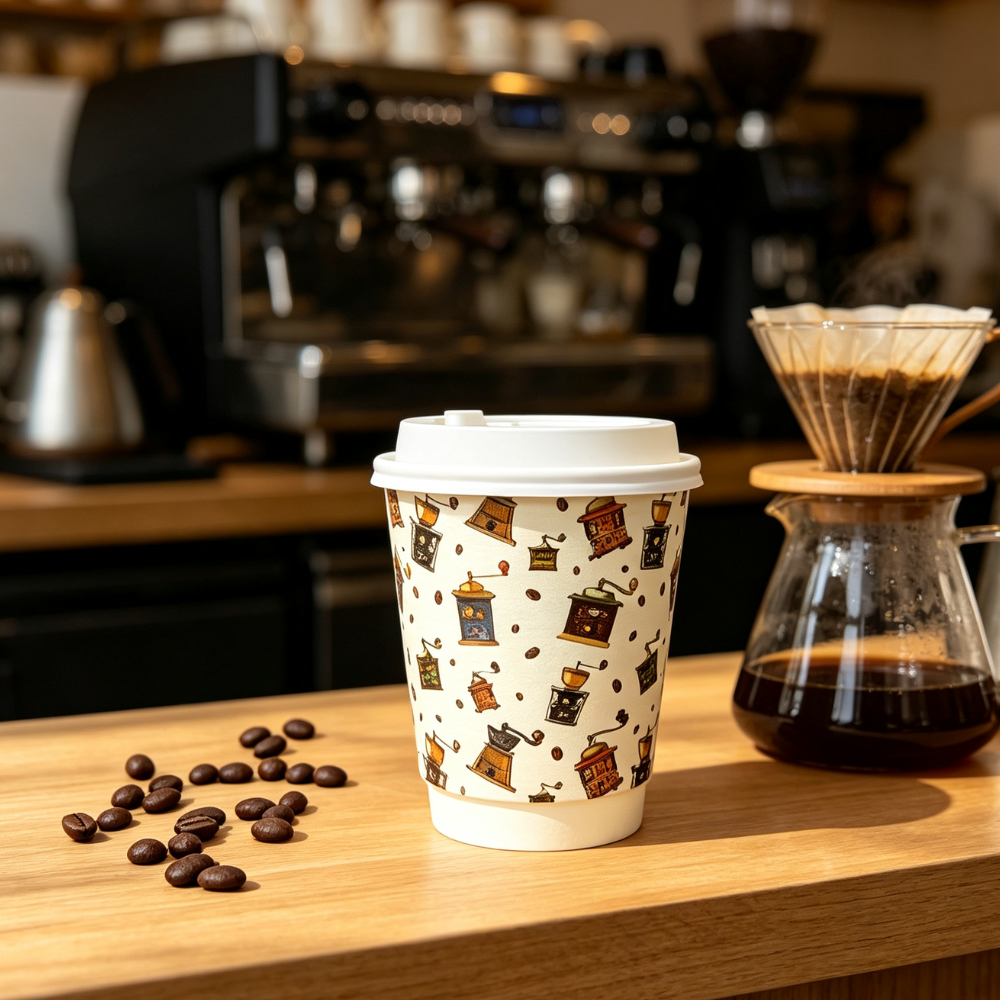
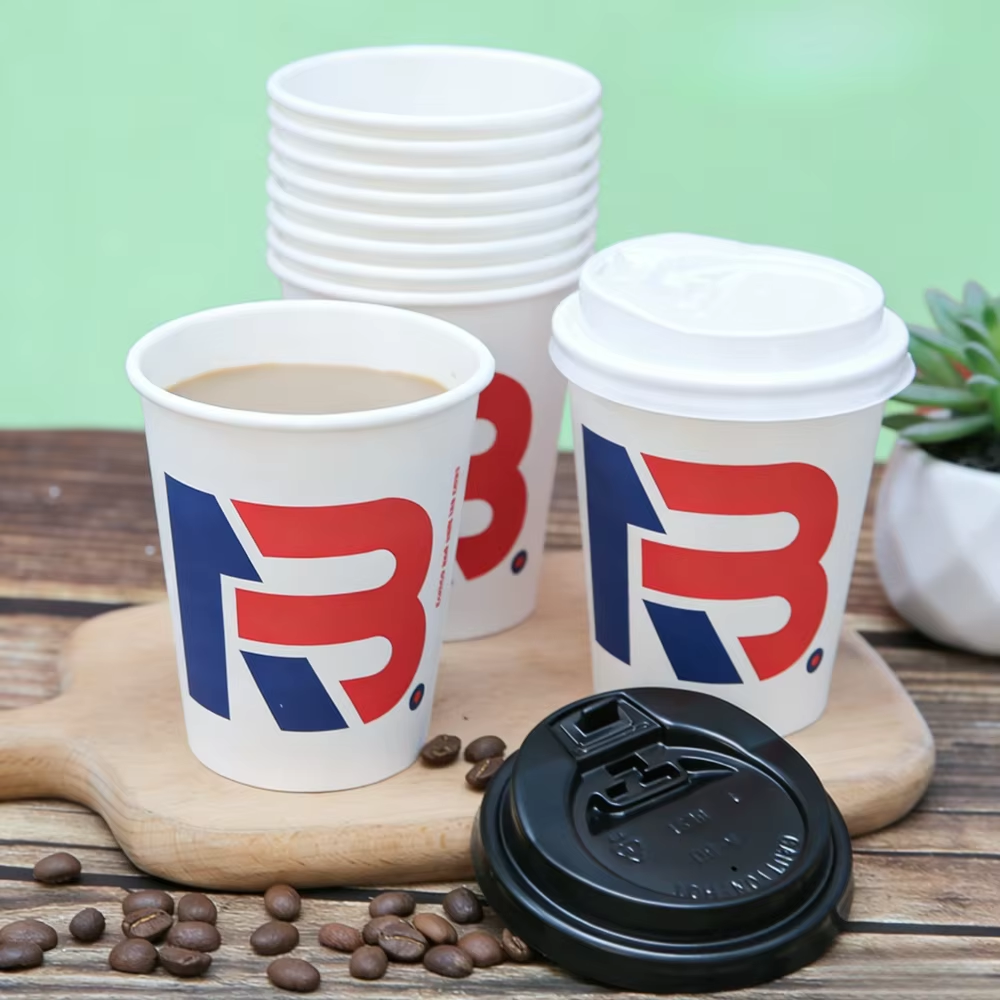
When a printed paper cups manufacturer processes a bulk order, the ink must bond perfectly to the surface of the paper. If the raw paperboard is too porous or rough, flexographic and offset inks will absorb unevenly, resulting in blurred edges, muted colors, and a cheapened brand image.
To achieve photographic print quality, a high-end printed paper cups manufacturer will specifically source ultra-smooth, high-density cup stock. Furthermore, the type of coating directly affects the visual finish of the final product:
As global legislation moves away from traditional petroleum-based plastics, the raw materials used in cup production are evolving. Buyers looking to hit corporate sustainability metrics are shifting their procurement toward next-generation disposable cups paper that utilizes PLA (Polylactic Acid) or water-based aqueous coatings instead of traditional PE.
These sustainable alternatives provide the same critical moisture barriers required by high-volume disposable paper cup manufacturers, but they allow the final product to be processed in commercial composting facilities or standard paper recycling streams.
Sourcing commercial packaging goes far beyond picking a size and a color. The longevity, safety, and visual appeal of the container depend entirely on the fundamental chemistry and weight of the raw board. By understanding the distinct requirements for condensation management, GSM ratios, and print-surface smoothness, B2B buyers can confidently source disposable cups paper that protects the beverage and elevates the brand's operational standards.
Our technical team can clarify how these insights apply to your specific product line and market requirements. Reach out to discuss your needs.

 EN