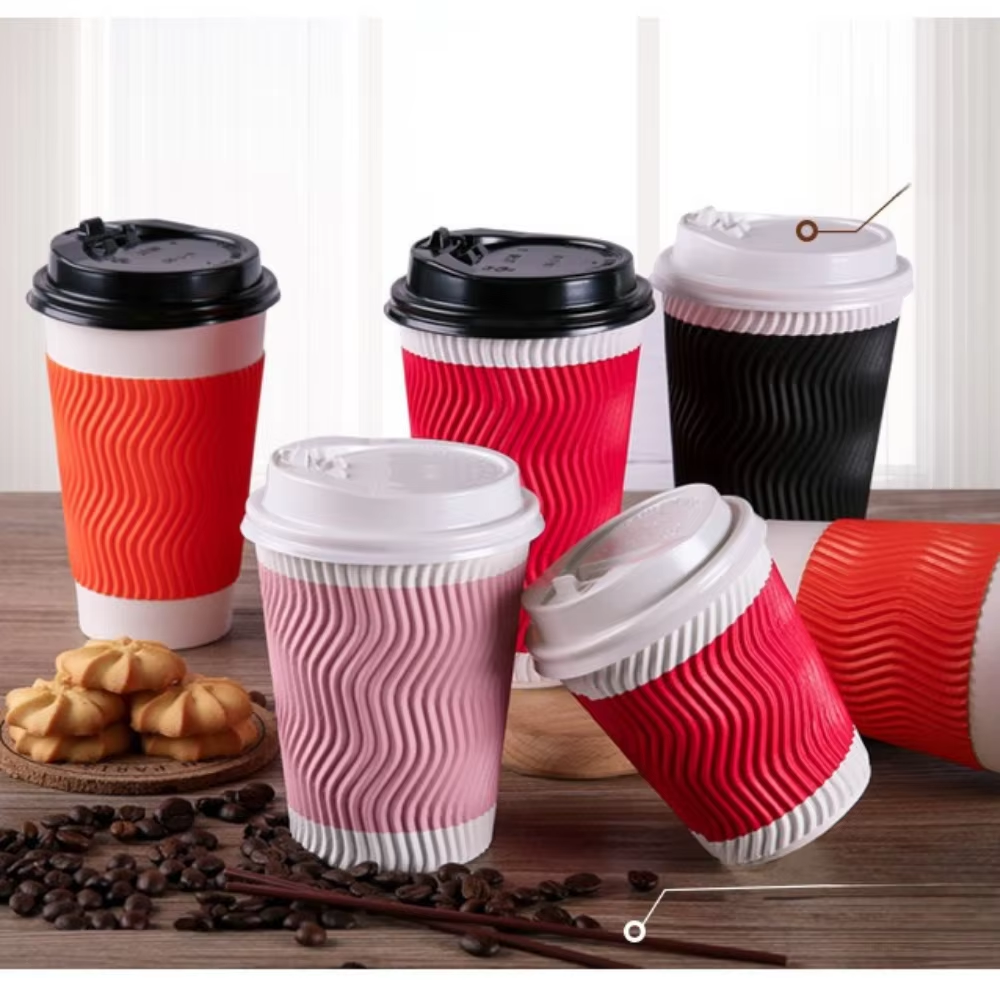
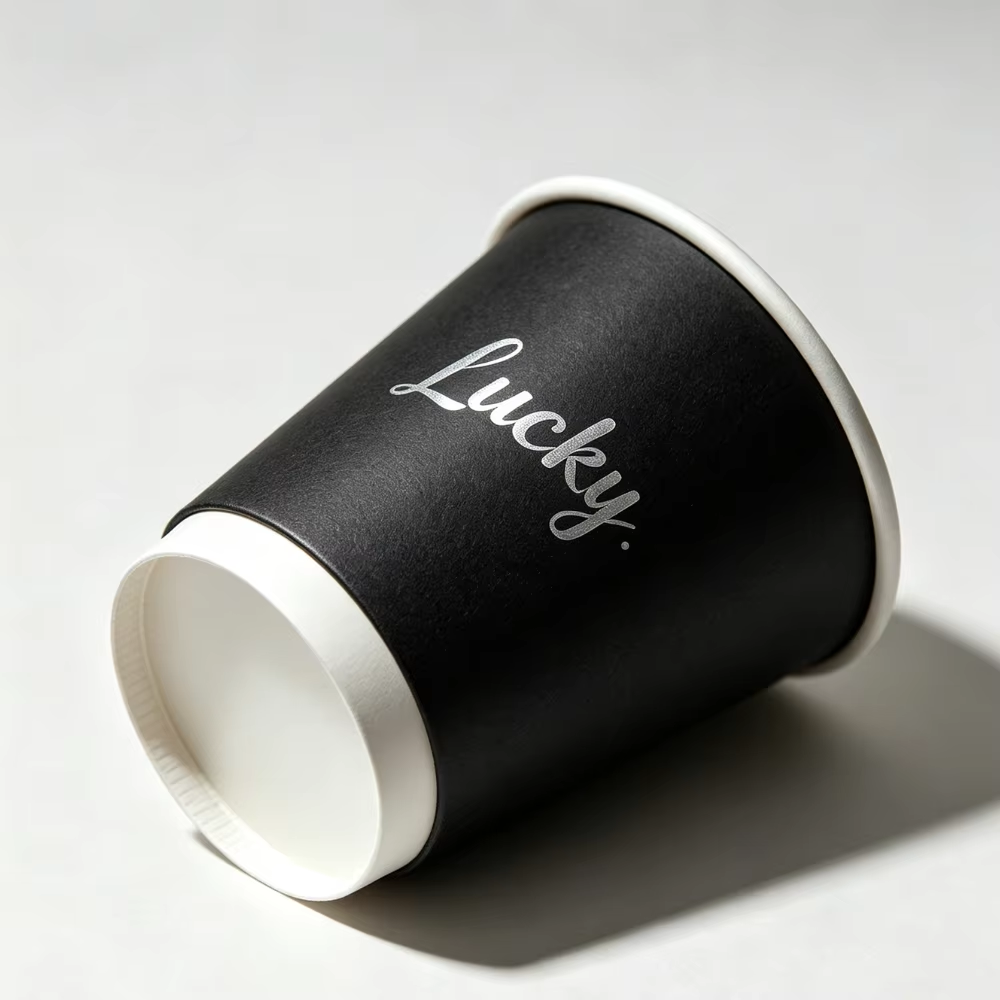
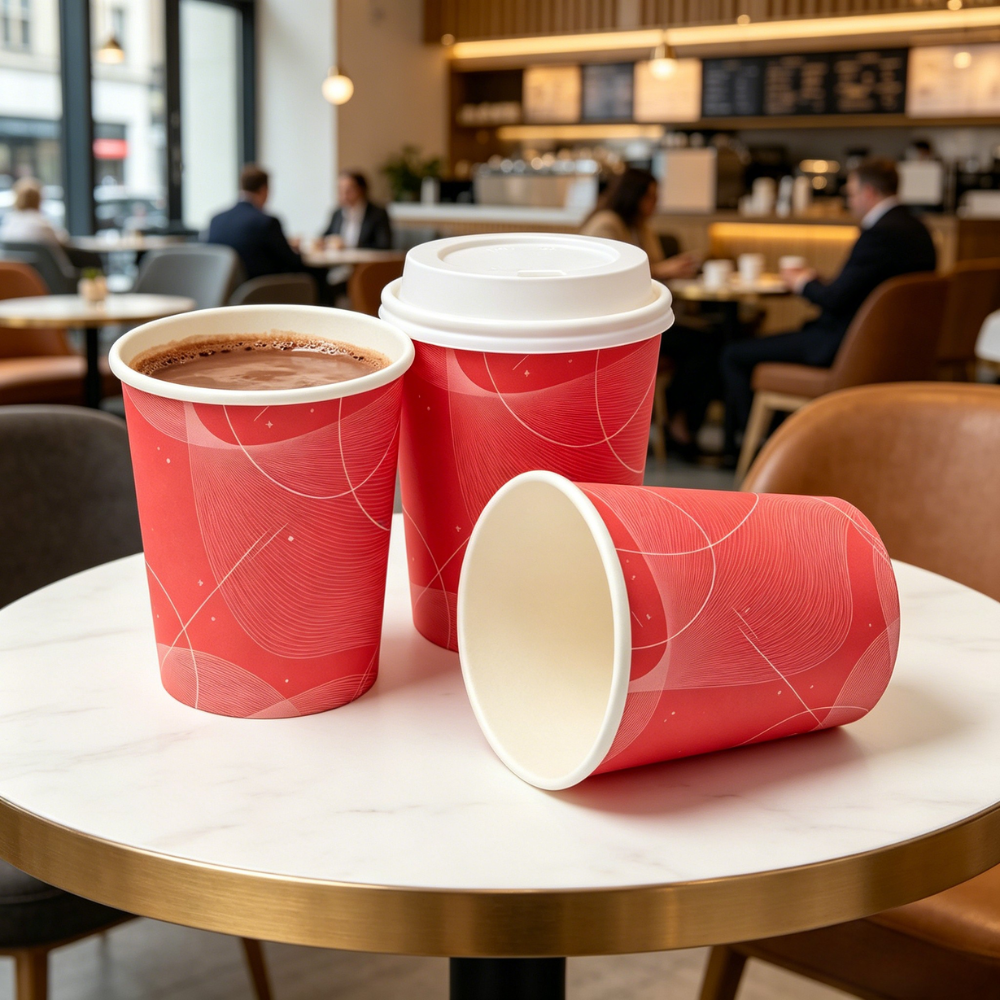
As a packaging manufacturer, I recently had a consultation with the procurement team of a regional bakery chain. They were facing a sudden spike in customer complaints. The issue wasn't the quality of their dark roast; it was their packaging. They had sourced a container load of hot paper cups purely based on the lowest unit price. The result? Softening bottom seams, failing lids, and burned hands during the morning rush.
I constantly remind B2B buyers that not all hot paper cups are built to handle the harsh physics of a 195°F (90°C) beverage. From a factory floor perspective, manufacturing reliable hot paper cups involves complex material science, precise dimensional tolerances, and rigorous quality assurance testing.
Whether you are buying for a hospital cafeteria, an airline, or a national coffee franchise, here is an insider’s technical guide to evaluating hot paper cups based on heat resistance, barrier coatings, wall types, and lid compatibility.
The primary function of any hot beverage container is thermal management. When you pour near-boiling water into standard hot paper cups, the heat immediately begins transferring through the paperboard to the customer's skin.
How you manage that heat dictates your purchasing strategy:
To give you an idea of the engineering difference, here is a snapshot of our factory's thermal testing data when cups are filled with 90°C liquid:
| Cup Wall Structure | Exterior Surface Temp (After 1 Min) | Sleeve Required? | Best Application |
| Standard Single Wall | ~ 82°C (180°F) | Yes | Lukewarm lattes, warm tea |
| Double Wall | ~ 55°C (131°F) | No | Americanos, drip coffee |
| Corrugated Ripple Wall | ~ 48°C (118°F) | No | Extra-hot specialty drinks |
Raw paper naturally absorbs water. Without a waterproof barrier, your hot paper cups would turn into mush within seconds. The inner lining is where the true chemical engineering takes place.
Historically, the industry standard has been the pe coated paper cup. Polyethylene (PE) is highly effective because it has a high melting point and can withstand temperatures up to 100°C without degrading, leaking, or off-gassing plastic odors into the beverage.
However, as corporate ESG (Environmental, Social, and Governance) requirements tighten, many B2B buyers are shifting their procurement toward compostable hot cups. If you go this route, you must tread carefully. Many sustainable hot paper cups use a PLA (Polylactic Acid) lining derived from corn starch. While excellent for the environment, standard PLA can begin to soften at around 80°C. If your supplier doesn't use a crystallized, high-heat modified PLA (CPLA) or a modern water-based aqueous coating, a boiling hot pour-over coffee could compromise the cup's structural integrity. Always ask your manufacturer about the exact thermal threshold of their eco-coatings.
A premium cup is absolutely useless if the lid pops off and spills coffee on a customer's lap.
We frequently get asked by franchise owners to produce hot cups with lids as a complete, matching set, and I strongly recommend this procurement approach. When you buy your lids from Supplier A and your hot paper cups from Supplier B, you are risking a dimensional mismatch.
The secret to a leak-proof seal is the "rolled rim" at the top of the cup. In a high-quality manufacturing facility, the tooling that curls the rim of our hot paper cups is calibrated to a tolerance of just fractions of a millimeter. The rim must be incredibly rigid. If the paperboard is too thin, or if the factory's tooling is worn out, the rim will flex and compress when the barista presses the lid down.
A proper lid fit should produce an audible, satisfying "snap." If the lid slides on silently and easily, the seal is too loose, and the beverage will eventually leak from the seam when tilted.
How do you know if your supplier is actually delivering quality? Before a newly manufactured batch of hot paper cups leaves our facility, we subject them to harsh physical QA protocols.
If you are vetting a new supplier for disposable hot cups, ask them if they perform these two critical tests:
Procuring reliable hot paper cups is a delicate balancing act between unit cost, thermal safety, and brand reputation.
By understanding the relationship between the wall structure, the heat resistance of the inner coating, and the mechanical rigidity of the rim, your purchasing team can make highly informed, risk-free decisions. Ultimately, investing in well-engineered hot paper cups prevents operational bottlenecks behind the counter and guarantees a safe, premium drinking experience that keeps your customers coming back.
Our technical team can clarify how these insights apply to your specific product line and market requirements. Reach out to discuss your needs.

 EN