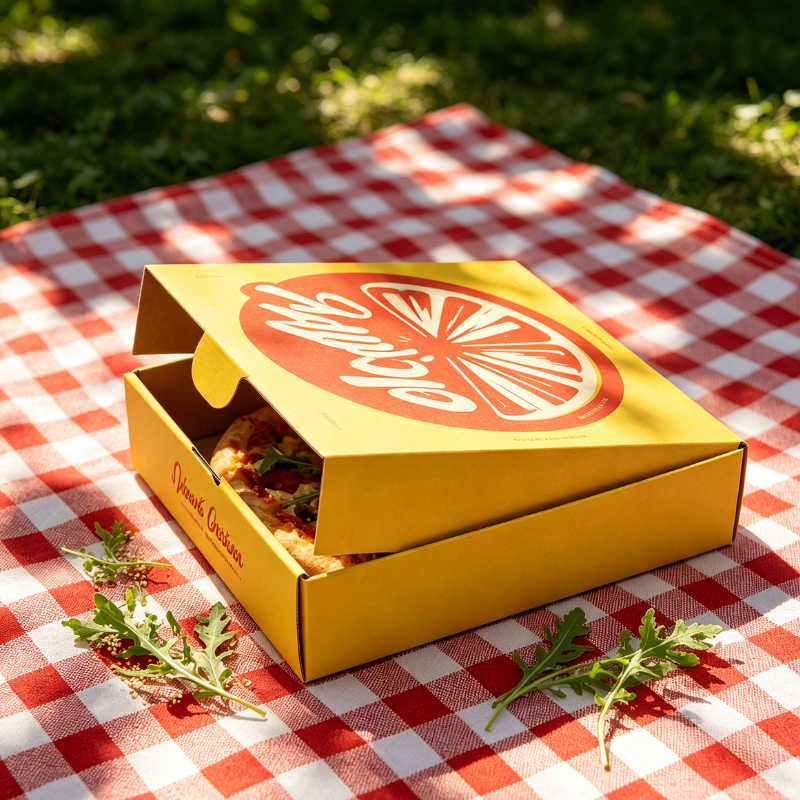
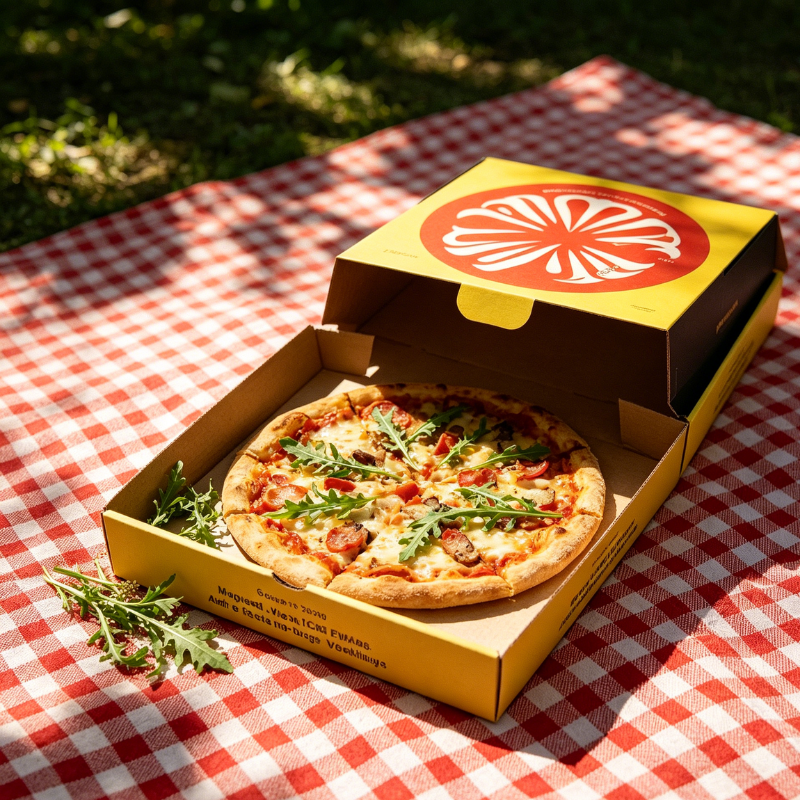
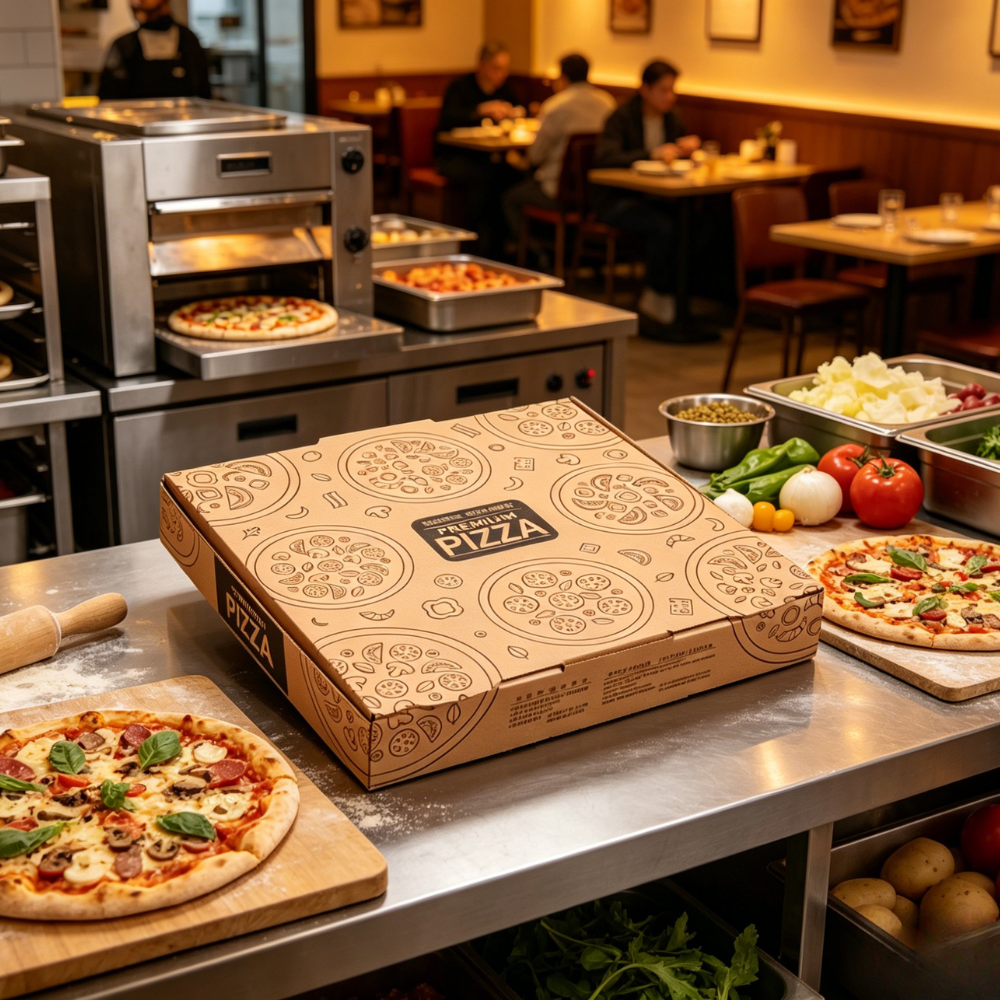
In the highly competitive restaurant industry, the off-premise dining experience can make or break a brand. For pizzerias, ghost kitchens, and Italian restaurant franchises, the moment a hot pie is handed to a delivery driver, the kitchen loses control over food quality. From that second forward, the pizza box takeaway container is entirely responsible for preserving the temperature, texture, and visual appeal of the meal.
For restaurant owners and procurement managers, buying packaging is often viewed strictly through the lens of cost reduction. However, ordering the cheapest available container often leads to disastrous results: crushed cheese, soggy crusts, and grease-stained hands. In today’s market, poor packaging directly translates to negative online reviews and lost repeat customers.
When you are preparing to order bulk pizza boxes by the pallet or container load, you are making a strategic operational decision. As an integrated packaging manufacturer supplying global food brands, we highly recommend looking beyond the price per unit. Here is exactly what B2B buyers must compare to ensure their pizza box takeaway solution supports their culinary standards and bottom line.
Not all cardboard is created equal. A standard paperboard box offers virtually zero thermal retention and collapses easily under ambient moisture. For hot, heavy food, a properly engineered pizza corrugated box is non-negotiable.
However, within the corrugated category, procurement teams must compare flute profiles. The fluting is the wavy inner layer of paper that provides vertical strength and thermal insulation.
| Flute Type | Board Thickness | Insulation Rating | Stacking Strength | Best Restaurant Application |
| B-Flute | ~3.2mm | Excellent | Superior | Large, heavy 16-inch to 18-inch deep-dish pies. |
| E-Flute | ~1.6mm | Very Good | Excellent | Standard 10-inch to 14-inch takeaway pizza boxes. |
| F-Flute | ~0.8mm | Good | Moderate | Personal flatbreads or single slices. |
For standard franchise operations, E-flute is widely considered the industry sweet spot. It provides enough insulating air pockets to keep the food piping hot, but it is thin enough to allow for crisp, fast folding in a busy kitchen.
Furthermore, ask your supplier about their paper pulp sourcing. Boxes made entirely from short-fiber recycled paper are prone to tearing at the hinge lines. By sourcing a pizza corrugated box that utilizes a high percentage of long-fiber virgin pulp—such as those produced through our integrated plantation-to-packaging supply chain—restaurants guarantee that their boxes fold effortlessly and withstand the rigors of third-party delivery.
The internal environment of a pizza box takeaway container is hostile. A fresh pizza releases a massive amount of steam. If the box is sealed too tightly, that steam condensates on the lid and drips back down, ruining the crust. If the box has too much ventilation, the pizza arrives cold.
Compare the ventilation design of your potential suppliers. High-quality takeaway pizza boxes feature strategically placed, semi-punched vent holes at the rear corners, allowing just enough steam to escape while trapping the ambient heat.
Equally important is grease resistance. Heavy oils from pepperoni or extra cheese will pool at the bottom of the box. In the past, manufacturers used PFAS (per- and polyfluoroalkyl substances) to block grease. With strict global regulations now banning these "forever chemicals," restaurants must be cautious. Ensure your supplier uses modern, FDA and EU ISEGA-validated aqueous (water-based) barriers. This ensures your pizza box takeaway packaging remains grease-proof, food-safe, and environmentally compliant.
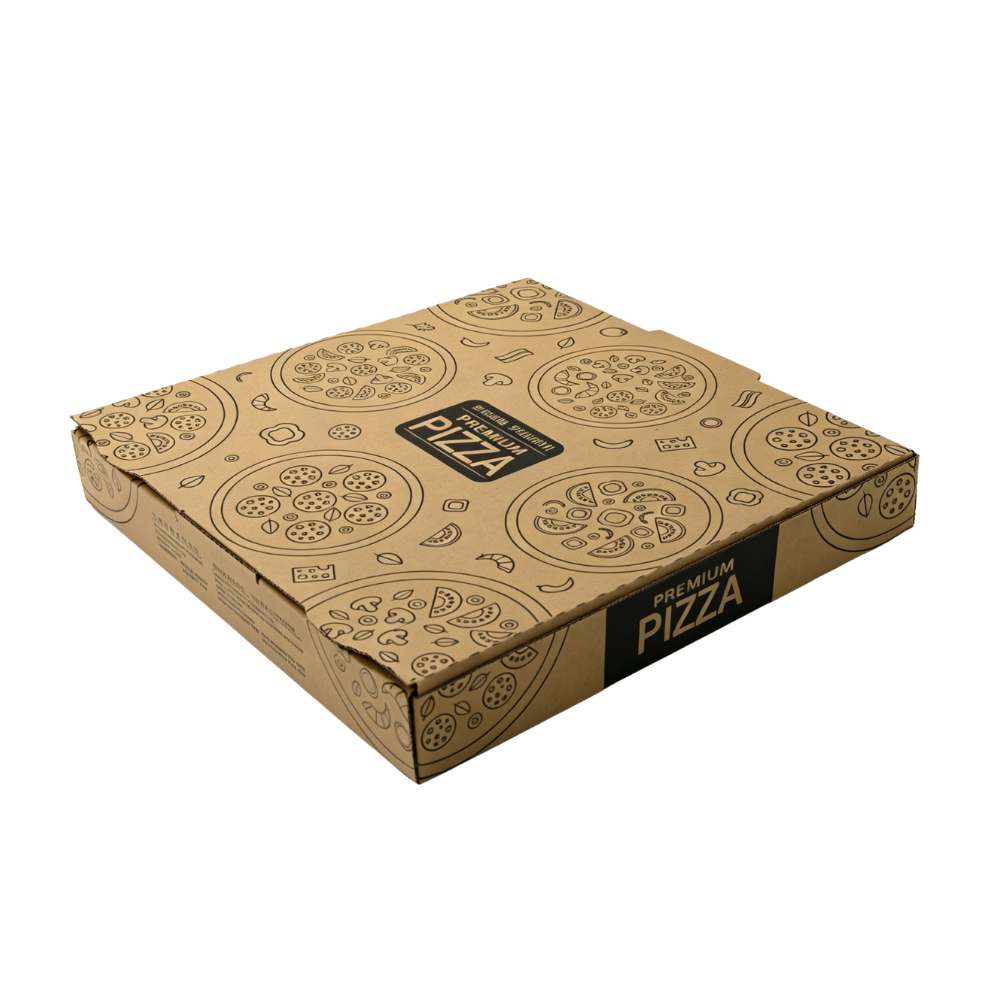
A plain, unbranded kraft box is a missed opportunity. Because a pizza box takeaway container often sits on a customer’s kitchen counter or office desk for hours, it acts as a highly visible micro-billboard.
When ordering at scale, compare the printing capabilities of your manufacturing partners. You should view custom printed pizza boxes not as an expense, but as a customer acquisition tool.
Can the supplier handle high-definition flexographic or offset printing? Tight color registration is essential. If a restaurant logo is printed with overlapping, blurry colors, it subconsciously lowers the perceived value of the food inside. Modern custom printed pizza boxes should feature crisp, multi-color branding, heating instructions, and scannable QR codes. A simple QR code on the lid that links directly to a restaurant’s proprietary ordering app can help operators bypass hefty third-party delivery fees on future orders, delivering an immediate return on investment.
Finally, B2B procurement is about logistics. When a restaurant chain or regional distributor orders bulk pizza boxes, they are essentially paying to ship a lot of air.
Compare how suppliers pack and ship their products. Precision die-cutting matters immensely here. If a pizza corrugated box is cut with high precision, the flat boards will nest tightly together. An experienced manufacturer will aggressively compress these nested boards and configure them onto optimized pallets. This space optimization maximizes the capacity of an ocean freight container, drastically lowering the landed cost per unit.
Additionally, evaluate the supplier's overall stability. Relying on a fragmented supply chain—where the pulp comes from one company, the board from another, and the printing from a third—introduces severe risk of delays and batch inconsistencies. By partnering with a fully integrated manufacturer, buyers gain the security of a closed-loop system. We oversee the sustainable forestry, the paper milling, the barrier coating, and the final converting, ensuring that every pallet of bulk pizza boxes you receive perfectly matches your approved specifications.
Before signing a purchase order for your next quarter's inventory, take the time to compare the structural, chemical, and logistical capabilities of your packaging. A properly engineered pizza box takeaway container protects your culinary reputation, enhances your brand visibility through custom printed pizza boxes, and streamlines your back-of-house operations. By choosing an integrated, quality-focused manufacturing partner, restaurants can turn their packaging from a standard operational cost into a distinct competitive advantage.
Our technical team can clarify how these insights apply to your specific product line and market requirements. Reach out to discuss your needs.

 EN