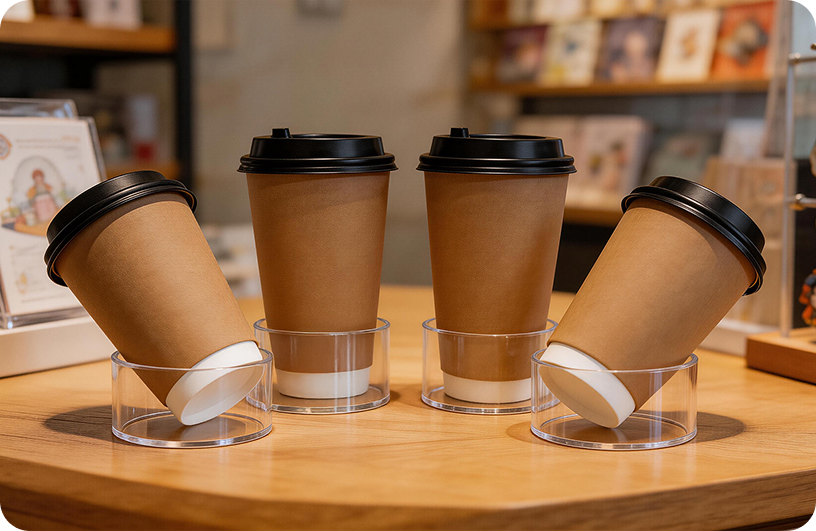
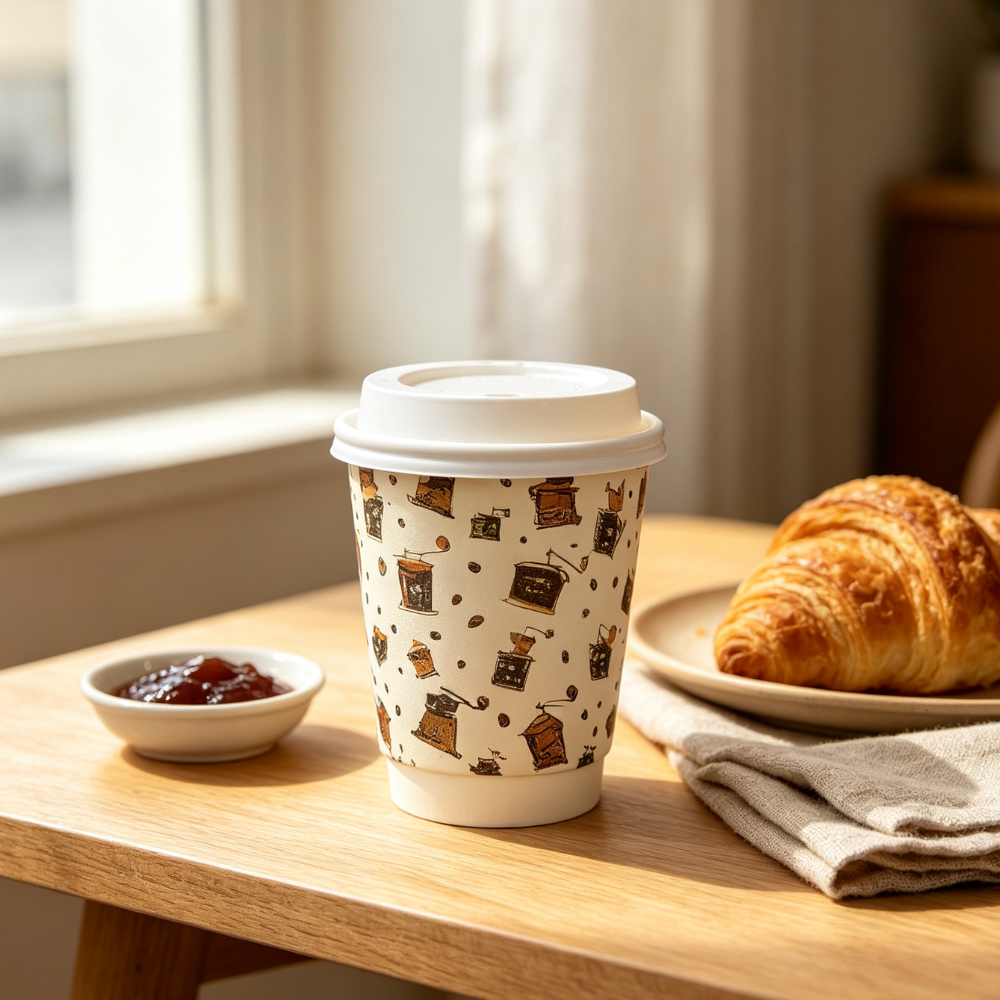
I’ve sat in countless procurement meetings with beverage directors and supply chain managers over the last decade, and the conversation almost always shifts to one topic: sustainability. Today's consumers demand eco-friendly options, and local governments are heavily taxing or outright banning single-use plastics.
But when it comes to replacing standard packaging, B2B buyers often find themselves paralyzed by confusing terminology. Should you buy recyclable paper cups? What about compostable ones? Will they leak? Will they double your packaging budget?
As a supplier deeply involved in paper cup manufacturing, I want to pull back the curtain. If you are sourcing recyclable paper cups for a coffee shop, restaurant, or a regional takeaway chain, you need to look past the green leaf logos. You need to understand the structural realities, the coating technologies, and the actual waste infrastructure in your operating regions.
Here is your practical guide to sourcing the right recyclable paper cups without sacrificing cup performance or blowing up your margins.
To understand how to buy recyclable paper cups, you first need to know why standard paper cups usually end up in a landfill.
Paper itself is highly recyclable. However, to stop hot coffee or iced tea from turning a paper cup into a soggy mess, the inside of the cup must be lined with a moisture barrier. For decades, the industry standard has been a thin layer of Polyethylene (PE) plastic. While PE works brilliantly for waterproofing, it is notoriously difficult for standard paper recycling mills to separate the plastic film from the paper fibers.
True recyclable paper cups use a different technology: Water-Based Barrier Coatings (WBBC) or aqueous coatings.
Instead of laminating a plastic film onto the paperboard, aqueous coatings are painted onto the paper like a varnish. When recyclable paper cups made with water-based coatings arrive at a standard recycling facility, they can easily be repulped. The coating dissolves or breaks down during the standard paper washing process, allowing the high-quality wood fibers to be recovered and turned into new sustainable paper packaging like folded carton food boxes or office paper.
When upgrading your packaging, you generally face a fork in the road: do you choose recyclable paper cups or compostable paper cups (usually lined with PLA - Polylactic Acid)?
Here is how I usually break it down for our wholesale clients:
| Feature | Recyclable Paper Cups (Aqueous/Water-Based) | Compostable Paper Cups (PLA Lined) | Standard Cups (PE Lined) |
| End-of-Life | Repulpable in standard paper recycling streams | Requires commercial composting facilities | General waste / Landfill |
| Heat Resistance | Excellent for boiling liquids | Good, but can soften slightly at extreme temps | Excellent |
| Availability | Rapidly growing, highly demanded in Europe/UK | Widely available | Universal |
| Best For... | Regions with standard paper recycling bins | Closed-loop environments (festivals, offices) | Markets with no eco-regulations |
To be completely blunt, if your customers take their coffee to-go and throw the cup in a street bin, recyclable paper cups are usually the more pragmatic choice. Why? Because public recycling bins are everywhere, whereas commercial composting bins are incredibly rare on city streets. If a PLA compostable cup goes into a standard recycling bin, it acts as a contaminant.
Making sure your paper coffee cups recyclable credentials match the actual waste infrastructure of your city is a detail that separates smart procurement from performative greenwashing.
It’s easy to print a recycling logo on a cup, but producing high-quality recyclable paper cups requires immense technical precision. Because aqueous coatings are thinner and behave differently than PE plastic during the heat-sealing process, inexperienced factories struggle with bottom leakage and weak side seams.
When you are ready to order paper cups bulk, don't just ask for the price per carton. Ask your supplier these three questions:
Because water-based coatings are lighter, the structural integrity relies heavily on the base paper. If you run a high-volume coffee shop, a flimsy cup is a liability. We typically recommend a high-stiffness food-grade board (around 300-320 GSM for standard 12oz to 16oz hot cups) to ensure recyclable paper cups maintain their rigidity when filled with a 90°C Americano.
The bottom seal (the knurling) is where 90% of cup failures occur. In modern paper cup manufacturing, sealing water-based coated paper requires highly calibrated ultrasonic sealing or specific hot-air temperatures. If the temperature is too low, the cup leaks. If it’s too high, the coating burns. Ask your supplier for their quality control protocols regarding leakage testing.
There is no point in investing in premium recyclable paper cups if the lids pop off during delivery. Whether you choose bagasse (sugarcane) lids, CPLA lids, or standard paper lids, ensure they are manufactured to match the exact rim diameter and curl thickness of your chosen cups.
Last year, a mid-sized fast-casual restaurant chain came to us facing a PR nightmare. They had recently switched to early-generation recyclable paper cups sourced from a generic trading company to meet new local plastic bans. Within a month, they experienced a 4% leakage rate—which is catastrophically high in foodservice.
Our engineering team analyzed the failed cups. The trading company's factory was using an inconsistent, cheap aqueous coating, and their forming machines were not adjusted for the new material. We transitioned the chain to our standardized recyclable paper cups. By utilizing our integrated supply chain—where we control the paper pulp, the coating application, and the final cup forming—we provided a water-based coated cup with a stable, thick rim curl and a reinforced bottom seal.
The leakage rate dropped to zero. Furthermore, because we optimized their pallet loading for paper cups bulk shipping, their landed cost per unit actually decreased by 2% despite buying a vastly superior product.
Transitioning your inventory to recyclable paper cups is one of the most impactful steps a foodservice brand can take to future-proof its business against plastic taxes and shifting consumer loyalties.
However, you have to treat these cups as engineered products, not just cheap disposables. Look for a supplier who understands the nuances of base paper stiffness, water-based coating application, and precise machinery calibration. By asking the right questions and demanding rigorous testing, you can seamlessly integrate high-performing recyclable paper cups into your daily operations—keeping your customers happy, your drinks hot, and your brand reputation secure.
Our technical team can clarify how these insights apply to your specific product line and market requirements. Reach out to discuss your needs.

 EN