For enterprise cafes, independent roasteries, and institutional catering buyers, the fourth quarter is undeniably the most critical revenue window of the year. During this period, consumer demand heavily shifts toward premium, high-margin seasonal beverages—think peppermint mochas, gingerbread lattes, and artisanal spiced ciders. Because consumers are paying a premium for these specialty drinks, their expectations for the packaging are equally elevated.
Deploying custom christmas hot cups with lids is no longer a novelty; it is an industry-standard requirement to capture Q4 market share. However, sourcing seasonal packaging involves far more than just picking a festive design. Procurement teams must navigate complex timelines, adjust for winter beverage thermal dynamics, and ensure seamless lid compatibility.
As experienced manufacturing partners in the food packaging sector, we have guided countless B2B buyers through the seasonal procurement rush. Here is an authoritative buying guide on how to successfully forecast, design, and order your winter packaging inventory.
Winter beverage menus are fundamentally different from summer or spring offerings. The drinks are heavier, served at higher temperatures, and frequently topped with elaborate garnishes. If a procurement manager approaches Q4 ordering with the exact same SKU strategy they used in July, the operational friction on the cafe floor will be severe.
Consider the classic winter staple: hot cocoa. A standard black coffee can easily be served with a flat sip-hole lid. But a premium hot chocolate takeaway cup is almost always topped with a generous portion of whipped cream, marshmallows, or chocolate drizzles. If a barista attempts to force a standard flat lid onto this beverage, it completely crushes the toppings, ruining the premium visual presentation that the customer just paid $6 for.
When buyers order bulk coffee cups with lids for the holiday season, they must adjust their lid ratios. We recommend that cafes sourcing christmas hot cups with lids transition at least 40% of their lid inventory to elevated dome lids. This structural choice protects the integrity of the barista's work and enhances the perceived value of the drink.
Additionally, consumer sizing preferences shift in the winter. While 8oz and 12oz cups dominate the summer morning commute, colder weather drives a significant spike in 16oz and 20oz orders as customers seek prolonged warmth. Buyers should adjust their volume forecasting to heavier stock in these larger sizes.
When a customer walks out of a cafe in December, the ambient temperature immediately begins attacking the heat of the beverage. Furthermore, cold hands are much more sensitive to the extreme heat radiating from the side of a thin paper cup.
If your brand typically uses standard, single-wall cups for the rest of the year, Q4 is the time to rethink your board construction.
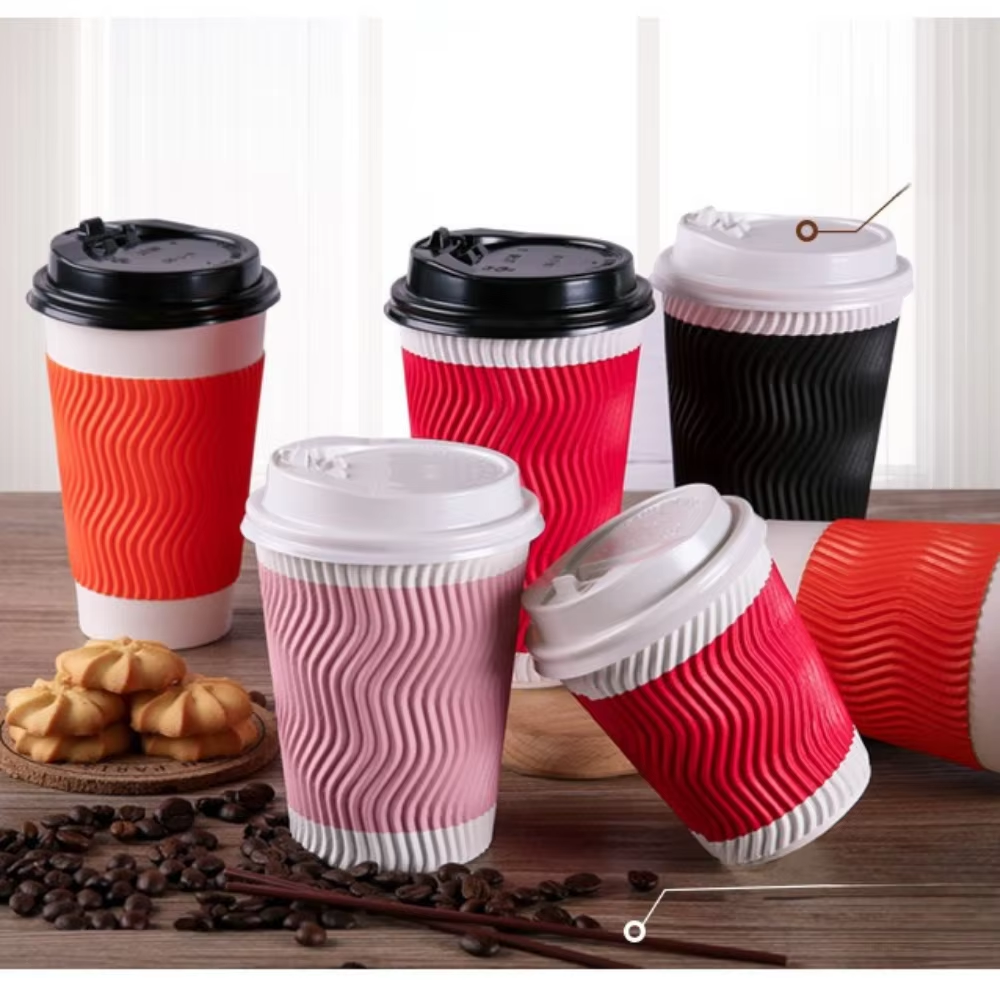
Many top-tier paper cup suppliers advise enterprise clients to temporarily upgrade their seasonal inventory to double-wall or ripple-wall constructions.
The greatest logistical nightmare for a procurement manager is walking into a warehouse in mid-January and seeing three untouched pallets of cups adorned with Santa Claus and reindeer. Once the holiday passes, highly specific christmas paper cups instantly become "dead stock," making a brand look out-of-touch if used in the new year.
To maximize your bulk discount without risking leftover inventory, buyers should employ a "Winter Wonderland" design strategy.
Instead of printing literal holiday messaging, work with your paper cup suppliers to design christmas hot cups with lids that utilize broad winter motifs. Deep forest greens, metallic gold accents, geometric snowflakes, or cozy "sweater" textures evoke the festive feeling of Q4 without tying the cup to a specific December date. If you design your christmas paper cups around a general winter aesthetic, you can confidently continue serving them straight through January and February, entirely eliminating the financial risk of dead stock.
The global supply chain operates months in advance. Because Q4 is the busiest manufacturing season across all retail sectors, freight networks and printing presses are under immense strain.
If a B2B buyer waits until late September to search for bulk coffee cups with lids for their holiday menu, they are virtually guaranteed to miss their mid-November launch dates. To execute a flawless seasonal rollout, procurement teams should follow this baseline manufacturing timeline:
| Procurement Phase | Target Deadline | Strategic Actions for B2B Buyers |
| Forecasting & Artwork | July 15 - Aug 1 | Finalize the Q4 menu. Approve artwork for the christmas paper cups to ensure the design scales properly across 12oz and 16oz sizes. |
| PO Issuance | Aug 15 | Submit final Purchase Orders to paper cup suppliers. Lock in your production slot before the factory capacity maxes out. |
| Production & QC | September | Cups are printed, cut, glued, and undergo rigorous thermal and leak-testing protocols. |
| Freight Transit | October | Product is shipped via ocean or rail to regional distribution centers. |
| Retail Rollout | Nov 1 - Nov 10 | The bulk coffee cups with lids arrive at individual cafe locations just as the holiday marketing campaigns go live. |
Sourcing seasonal packaging is a high-stakes balancing act of marketing ambition and supply chain reality. The cups you serve during the winter holidays do more than just hold coffee; they act as mobile billboards that drive foot traffic and social media engagement during your most profitable quarter.
By planning your orders months in advance, matching high-dome lids to heavy winter beverages, and utilizing strategic designs that outlast the holiday itself, procurement teams can turn a logistical challenge into a massive competitive advantage. When you partner closely with reliable paper cup suppliers to secure high-quality christmas hot cups with lids, you ensure that every seasonal beverage you serve delivers the premium, festive experience your customers expect.


Our technical team can clarify how these insights apply to your specific product line and market requirements. Reach out to discuss your needs.

 EN