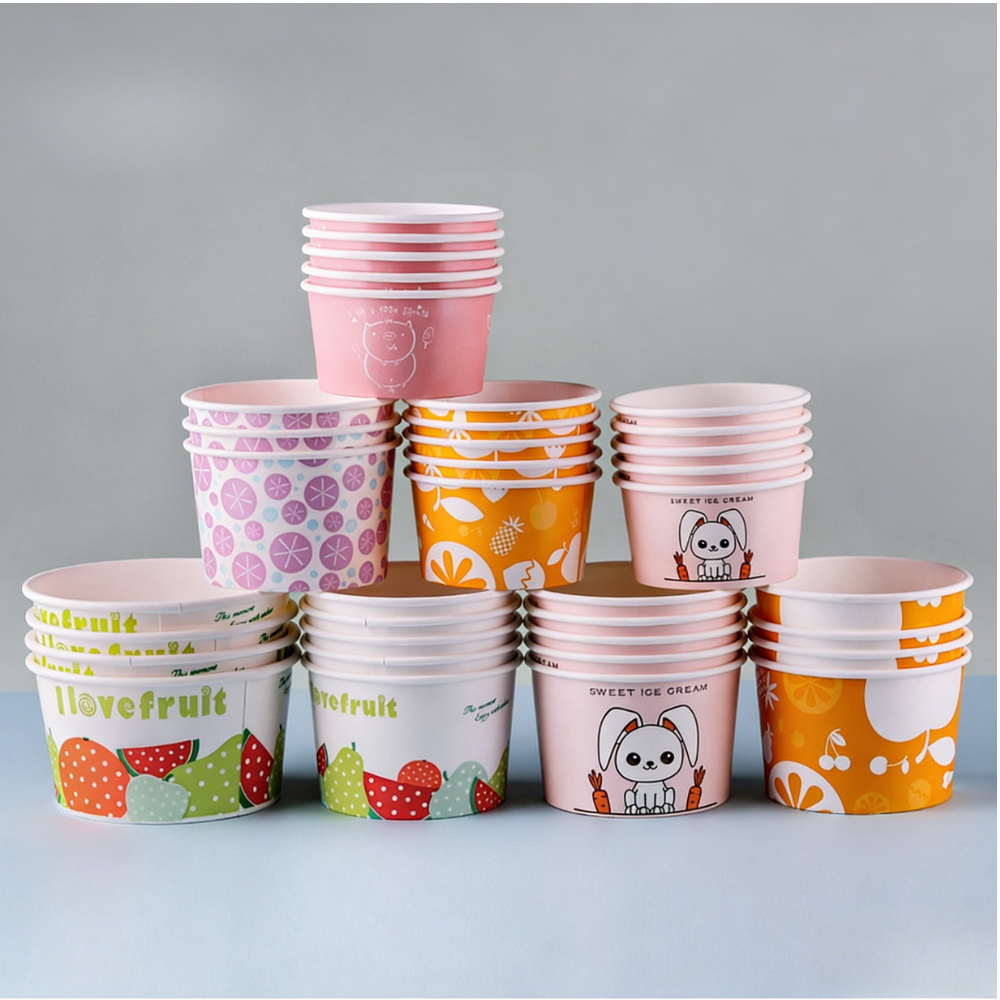
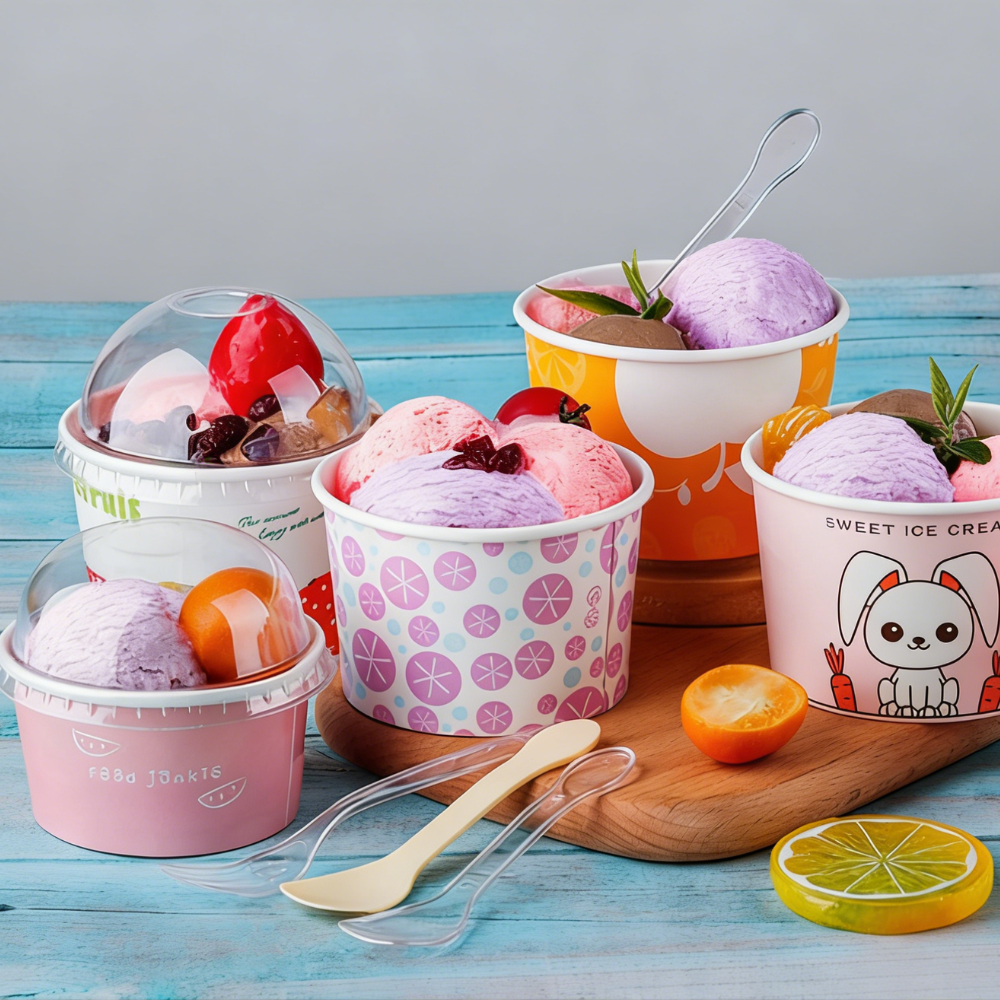
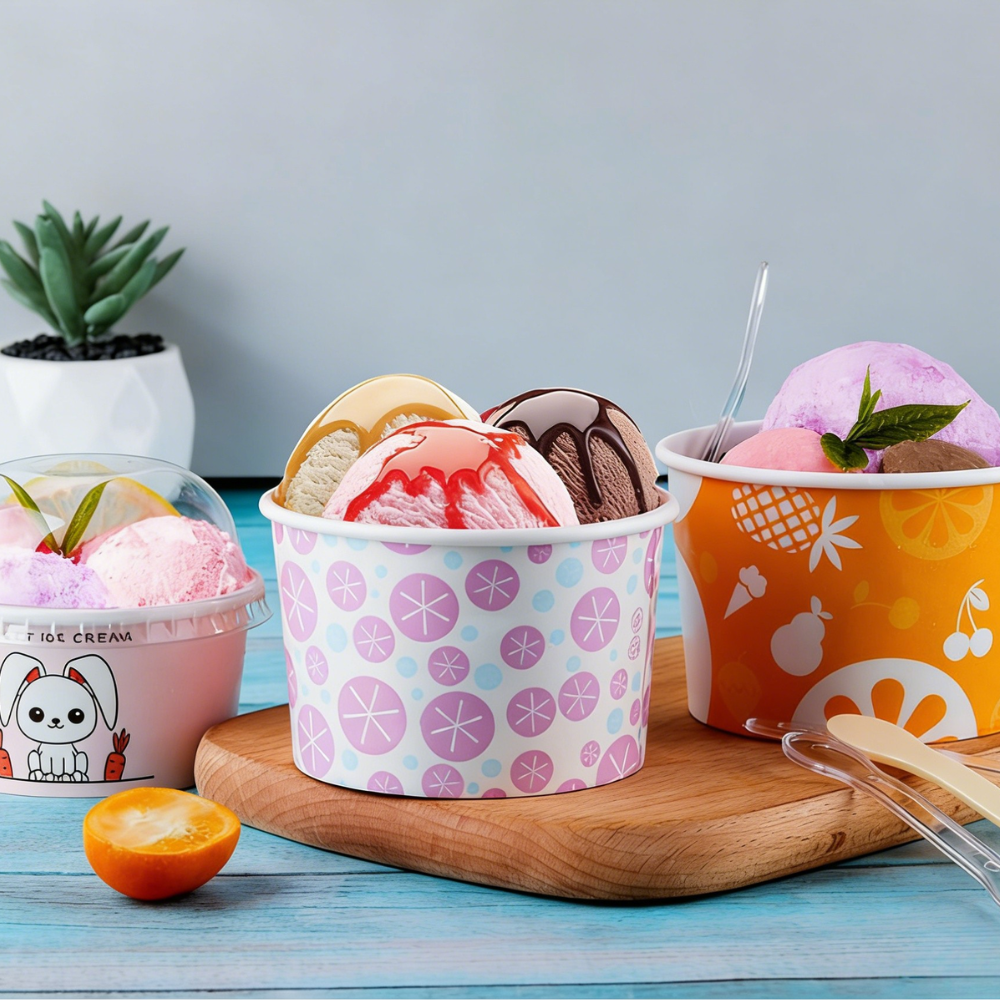
4 oz Ice Cream Cups with Lids | Small Paper Dessert Cups

Get a Free Quote

Our representative will contact you soon.
Name
Company Name
Email
Mobile
What are you looking for
Message/Project Details
0/1000
4 oz Ice Cream Cups with Lids for Small Dessert Portions

4 oz Ice Cream Cups with Lids for Small Dessert Portions

Plan small dessert servings with 4 oz ice cream cups with lids selected for your recipe, presentation, and storage routine. This paper-based format can suit tasting menus, children's portions, and individual dessert accompaniments where the finished serving fits comfortably below the closure. A nominal 4 US fluid ounces equals approximately 118 ml, but usable fill volume depends on the cup shape and lid clearance. Compare small ice cream cups with lids using actual scoops rather than portion names alone. Confirm the paperboard barrier, lid material, and intended temperature conditions before ordering. A fitted lid helps cover the dessert during handling; it does not automatically provide an airtight, leakproof, or tamper-evident seal.
Get A Quote

Practical Advantages of 4 oz Ice Cream Cups with Lids

Coordinate small portions, covered presentation, and customer access without oversizing the package.

Defined Small Portions

4 oz ice cream cups with lids provide a compact format for measured servings. Establish the portion using the finished recipe, allowing room for the closure rather than filling to the rim.

Covered Dessert Presentation

Small ice cream cups with lids help protect the serving surface from incidental contact during handoff. Close each cup carefully and keep the sealing area free of product.

Individual Flavor Identification

Paper ice cream cups can carry flavor names or order labels on an appropriate surface. This supports assortments where several small desserts look similar once their lids are fitted.

Coordinated Serving Sets

4 oz ice cream cups with lids can be assessed alongside a suitably sized spoon and tray. Matching these components helps customers carry, open, and enjoy the portion as intended.

4 oz Ice Cream Cups with Lids for Scoops, Samples, and Mini Desserts

Specify 4 oz ice cream cups with lids around the dessert you intend to serve, from a measured ice cream scoop to a compact gelato portion or frozen yogurt sample. Confirm the actual dimensions and usable capacity, since products carrying the same size designation may differ in shape. Paper ice cream cups should have a barrier suitable for the food and intended holding conditions. Discuss plain or printed exteriors and available lid materials with the supplier. For small ice cream cups with lids, compare top clearance, opening effort, and spoon access using filled samples. Request freezer suitability only where frozen storage is part of the application; immediate-service approval does not establish suitability for prolonged freezing.

Distinguish Capacity from Serving Weight

The “4 oz” designation on 4 oz ice cream cups with lids normally refers to volume, not four ounces of ice cream by weight. Product density and incorporated air affect how much a given portion weighs.
For example, a dense gelato and a more aerated ice cream may occupy similar space but have different weights. Select paper ice cream cups by testing your serving method, then document the portion separately.

Leave Space for the Closure

With 4 oz ice cream cups with lids, a scoop extending above the rim may interfere with closure even when the cup is not completely filled. Check the lid's underside as well as its visible outer shape.
For disposable dessert cups containing sauce or crumbs, include those additions in the fill trial. Avoid treating topping space as extra capacity available in every lid style.

Separate Immediate Service from Stored Portions

Small ice cream cups with lids used for immediate consumption face different conditions from portions prepared and frozen in advance. Storage introduces questions about label adhesion, lid performance, and changes during temperature cycling.
Approve 4 oz ice cream cups with lids for the complete process, including filling, closing, storage, and handoff. Packaging does not replace appropriate cold-chain controls or establish a dessert's shelf life.

Questions About 4 oz Ice Cream Cups with Lids

Understand portion volume, closure fit, and storage requirements before choosing your dessert packaging.

How many milliliters does a 4 oz cup hold?

Four US fluid ounces equals approximately 118 ml. For 4 oz ice cream cups with lids, confirm whether the listed capacity is nominal or measured to the brim. The practical serving volume may be lower.
That depends on the scoop size and how the portion is formed. Test small ice cream cups with lids using your actual scoop, recipe, and topping arrangement before setting a menu portion.
Only if the finished cup and lid are approved for the intended conditions. Paper ice cream cups require product-specific confirmation of freezer suitability, storage duration, and any temperature limits.
Not necessarily. 4 oz ice cream cups with lids may contain openings or use closures that are not liquid-tight. Keep portions upright and do not rely on the lid to contain melted product during transport.
Possibly, but the label and adhesive must suit the surface and application temperature. Test disposable dessert cups for adhesion, readability, and moisture exposure throughout the planned storage and serving process.
Follow local instructions for each component. Small ice cream cups with lids may combine different materials, and a paper body does not establish that the complete set is recyclable or compostable.

Related Articles

Small Paper Cups for Foodservice Buyers: Size Selection, Material Options, and Custom Printing

21

Sep

Small Paper Cups for Foodservice Buyers: Size Selection, Material Options, and Custom Printing

Sourcing small paper cups for espresso or sampling? Compare 4oz-8oz sizes, materials, and custom printing options for B2B foodservice buyers.
View More
How to Choose Paper Ice Cream Cups for Cold Desserts and Takeaway Packaging

21

Sep

How to Choose Paper Ice Cream Cups for Cold Desserts and Takeaway Packaging

Sourcing frozen dessert packaging? Read our B2B guide on paper ice cream cups, double-sided coatings, and biodegradable options for takeaway menus.
View More
Disposable Ice Cream Cups Guide: Choosing Leak-Resistant Packaging for Frozen Desserts

22

Sep

Disposable Ice Cream Cups Guide: Choosing Leak-Resistant Packaging for Frozen Desserts

Sourcing frozen dessert packaging? A manufacturer's B2B guide to choosing leak-resistant disposable ice cream cups, double-sided coatings, and secure lids.
View More
Compostable Paper Cups Guide: What Foodservice Buyers Should Know Before Bulk Ordering

22

Sep

Compostable Paper Cups Guide: What Foodservice Buyers Should Know Before Bulk Ordering

A B2B procurement guide for compostable paper cups. Learn about PLA vs. Aqueous coatings, thermal limits for compostable hot cups, and shelf-life management.
View More

Illustrative Buyer Perspectives on 4 oz Ice Cream Cups with Lids

Camille Rojas
Gelato Counter Manager

“We would test 4 oz ice cream cups with lids using our standard serving spatula. The portion needs to look appropriate without pressing against the underside of the lid.”

Dorian Mensah
Banquet Dessert Coordinator

“For small ice cream cups with lids, we would check flavor labels and tray spacing together. Our team needs to identify individual portions quickly during a dessert handoff.”

Anika Bellamy
Frozen Dessert Purchasing Lead

“When evaluating paper ice cream cups, we would separate immediate service from freezer storage. Each application would need its own sample checks before approval.”

Get a Free Quote

Our representative will contact you soon.
Name
Company Name
Email
Mobile
What are you looking for
Message/Project Details
0/1000
Translate Scoop Size into a Repeatable Finished Portion

Translate Scoop Size into a Repeatable Finished Portion

Choosing 4 oz ice cream cups with lids starts with the finished portion rather than the number printed on the carton. Ice cream contains varying amounts of incorporated air, so equal volumes can have different weights across recipes. Test the actual scoop or serving spatula with the product at its normal serving temperature. For paper ice cream cups, check how the portion sits against the sidewall and whether a rounded top reaches into the lid space. Include any sauce, crumbs, or fruit in the same trial instead of adding them after the package has been approved. Record the target serving weight separately from the cup capacity so staff do not confuse fluid ounces with weight ounces. Repeat the check when changing recipes or portion tools. This gives the team a practical serving reference and helps keep the small dessert presentation consistent without relying on an assumed one-scoop fit for every product.
Evaluate Lid Clearance and Spoon Access Together

Evaluate Lid Clearance and Spoon Access Together

A small dessert needs enough room for closure and a practical way to reach the contents. With 4 oz ice cream cups with lids, inspect the underside of the lid to see how much space it occupies below or above the rim. A closure that looks raised from the outside may still contact a tall scoop at its center. For small ice cream cups with lids, fit the lid after adding the complete portion and check for displaced sauce or ice cream on the sealing edge. Then remove it using the normal opening method and assess whether the dessert remains presentable. Try the intended spoon against the bottom and sidewall, since a wide spoon bowl can be awkward in a narrow container. Avoid promising spillproof performance unless the exact assembly has been tested for that purpose. Checking closure clearance and eating access together helps prevent a package that closes correctly but makes the final portion difficult to enjoy.
Validate the Workflow for Pre-Portioned Frozen Desserts

Validate the Workflow for Pre-Portioned Frozen Desserts

Pre-portioned desserts introduce storage steps that immediate counter service does not require. Before using 4 oz ice cream cups with lids for this purpose, confirm that both components are suitable for the planned freezer conditions. Fill and close samples through the normal workflow, then inspect them after the intended storage period. For disposable dessert cups, check the paper body, lid fit, and label condition when portions move from frozen storage to the serving area. Moisture can affect handling and identification even when no internal leak is visible. Record the recipe, packing date, and test conditions so observations relate to a defined process. Do not infer shelf life or protection against freezer burn from the presence of a lid alone. Keep food safety controls separate from packaging checks and review the process when the recipe, storage temperature, or selected cup-and-lid combination changes.